
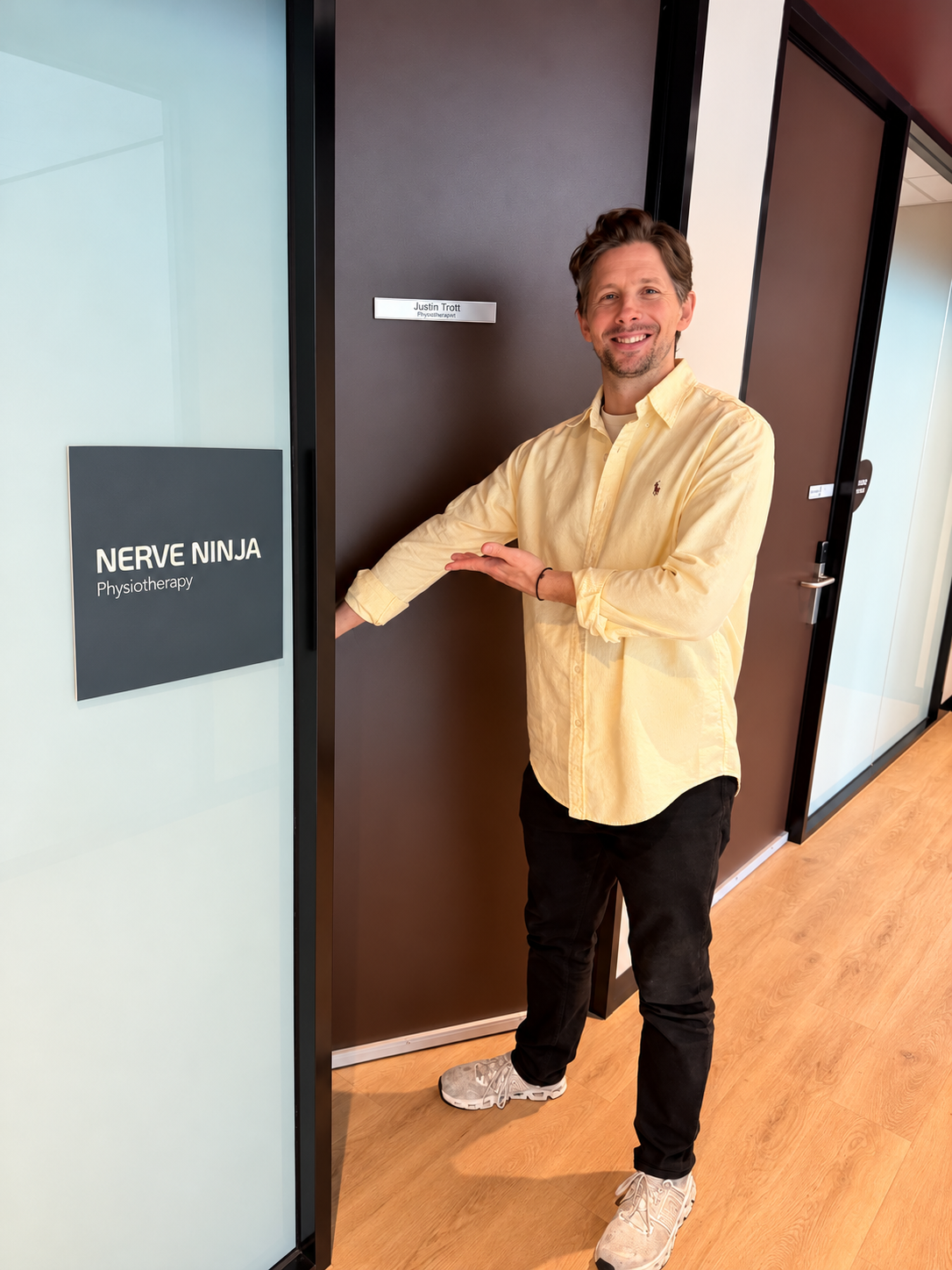
Meet Justin
Founder & Lead Physiotherapist
Hi, I'm Justin.
I've spent more than a decade helping people understand their bodies, recover from injury and move with greater confidence.
I began my career in Traditional Chinese Medicine and acupuncture before completing my Master of Physiotherapy at the University of Sydney. Since then, my curiosity has taken me into neuroscience, breathing and postural mechanics, neuromuscular rehabilitation and osteopathic approaches to manual therapy.
I don't believe any one discipline has all the answers. I'm interested in good ideas wherever they come from, and in finding the right approach for each person.
I've been on both sides of the treatment table.
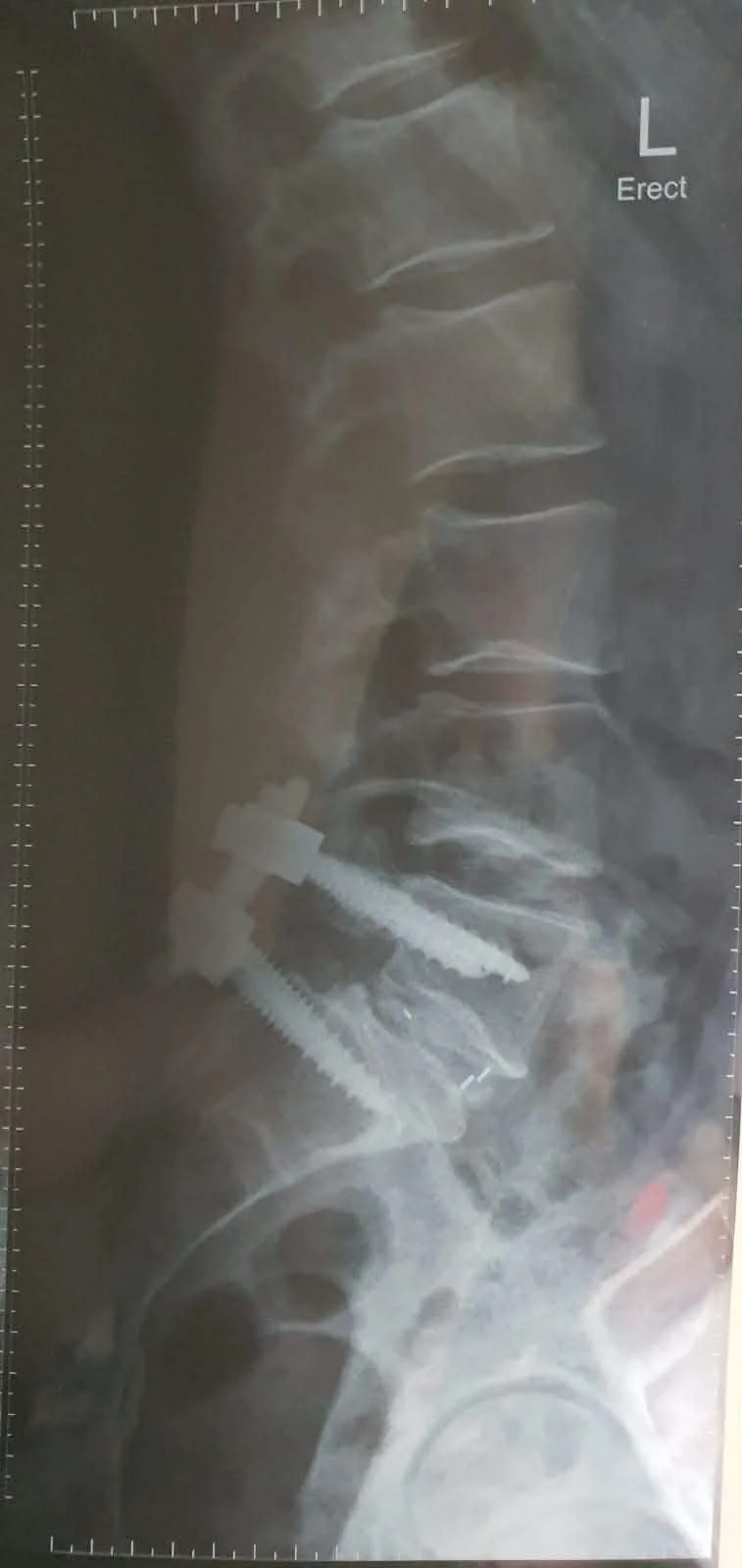
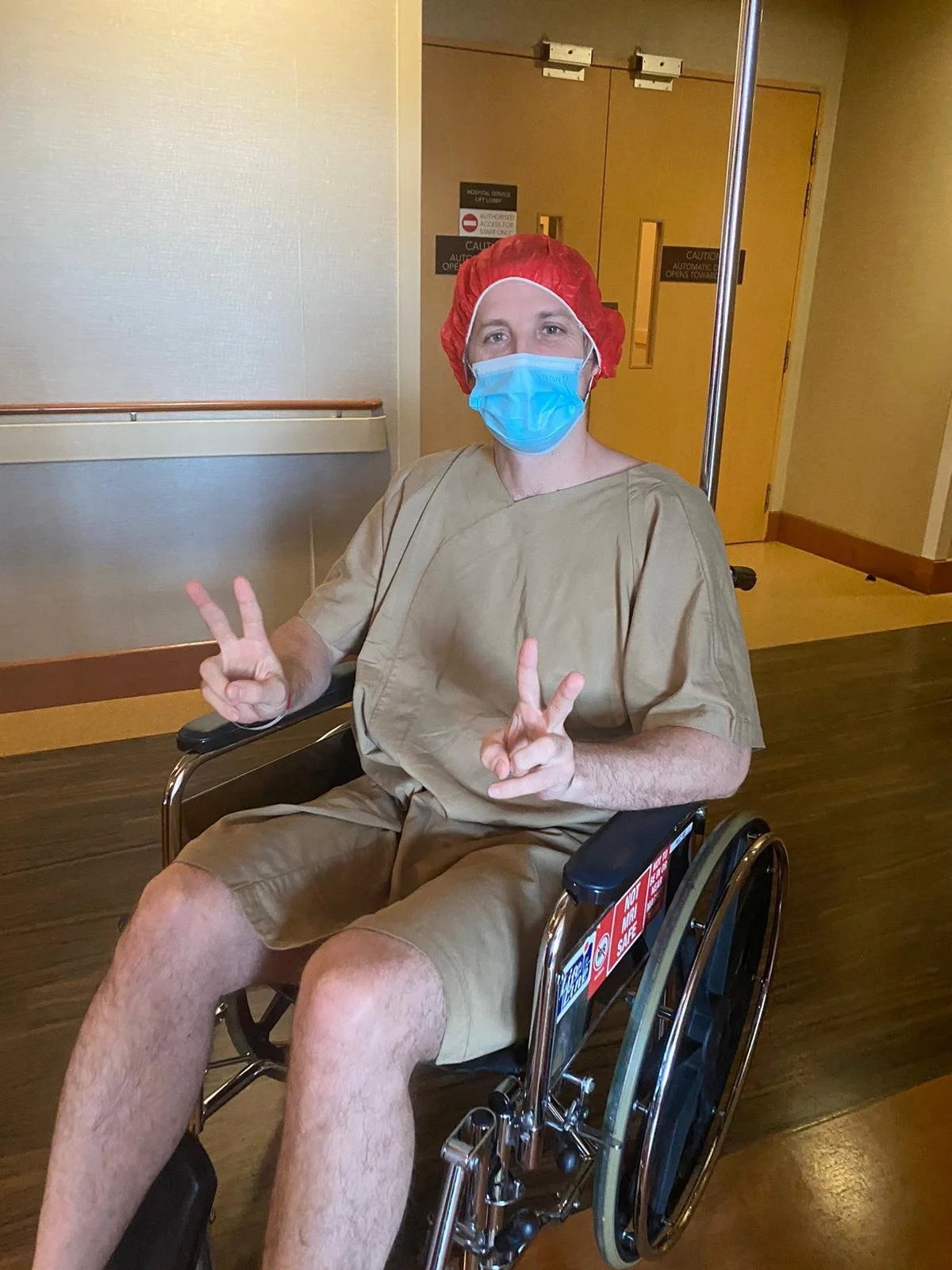
I spent decades following an active lifestyle — including regularly practising martial arts — without knowing I had an undiagnosed spinal fracture. During COVID era, I was hit by a trolley full of weights and eventually needed to get spinal surgery. By that point, the bone around the fracture had been worn down smooth.
Going through that experience gave me a different perspective on what it's like to be a patient. I know how frightening and frustrating it can be when something is wrong with your body, particularly when the answers aren't straightforward.
But it also left me with a lot of questions.
One of the strangest moments came when I saw my MRI scans. Until then, I hadn't experienced pain travelling down my legs. But looking at the images of my damaged spine seemed to trigger exactly that sensation.
Nothing had suddenly changed in my spine. What had changed was my understanding of what was happening to it.
That experience brought home just how complicated pain really is. It's not simply a signal from damaged tissue. Our brains, nervous systems, expectations, emotions and experiences all play a role in how pain is produced and perceived.
It also made me realise how much we're still learning about the nervous system. Pain neuroscience is developing rapidly, but there are still enormous questions about why we hurt, why pain persists and why people respond so differently to similar injuries.
I wanted to understand more.
My goal is to make myself less necessary.
I love helping people feel better. But I don't want anyone to feel they need to keep coming back to me forever.
Hands-on treatment can be useful, but it's only one part of physiotherapy. I want to help you understand your body, develop your movement skills and build the confidence to manage more on your own.
That means working with your body rather than forcing it, using the amount of treatment that's appropriate, and spacing out appointments as you progress.
I also don't believe in the all-knowing practitioner. You bring your experience of living in your body. I bring clinical knowledge and a lot of curiosity. Good care happens when we work together.
Qualifications & Training
I hold a Bachelor of Applied Science (Physiotherapy) and a Master of Physiotherapy from the University of Sydney.
Before becoming a physiotherapist, I studied Traditional Chinese Medicine, which introduced me to a different way of thinking about the human body and sparked an interest in exploring different approaches to treatment.
A commitment to lifelong learning
Completing my physiotherapy degrees was never going to be the end of my education.
The more I learn about the human body, the more I realise how much there is still to discover. I've continued to pursue specialised training in movement, breathing, neurology and manual therapy, learning from practitioners and researchers across different disciplines.
I'm interested in understanding why different approaches work, when they might be useful and where their limitations lie. I don't believe any one discipline has all the answers.
That curiosity has also taken me back to university, where I'm currently studying neuroscience.
Below are some of the approaches and techniques I've explored.
-
Bachelor of Health Science — Traditional Chinese Medicine (TCM)
University of Technology SydneyBefore training as a physiotherapist, Justin completed formal education in Traditional Chinese Medicine and practised clinically in Australia and China.
This background informs his holistic understanding of health and treatment therapies. Acupuncture is available to patients as part of physiotherapy sessions.
-
Training in breathing mechanics, postural asymmetries and the relationship between the diaphragm, rib cage, pelvis and movement.
-
Training in developmental movement principles, motor control and neuromuscular coordination.
-
Training in specialised manual therapy approaches involving the body's visceral structures and peripheral nerves.
Courses completed:
Visceral Manipulation 1 & 2
Neural Manipulation 1
-
A neuroscience-informed approach to movement and rehabilitation, exploring how the visual, vestibular (balance) and proprioceptive systems influence movement, coordination and physical performance
-
Training in manual assessment and treatment techniques focused on the foot and ankle.
-
Postgraduate training in craniosacral approaches.
Courses completed:
CranioSacral Therapy 1 & 2
SomatoEmotional Release 1
The Brain Speaks 1 & 2
Beyond the Cranial Base
-
Training in joint mobility, active range of motion and developing strength and control throughout a joint's available movement.
-
A clinical assessment framework used to identify movement limitations, distinguish between mobility and stability difficulties, and guide further examination and treatment planning.
-
A movement screening system that uses a series of standardised tasks to assess fundamental movement patterns and identify limitations or asymmetries.
-
A manual assessment and treatment approach. The method focuses on sensory receptors, proprioception and proposed relationships between sensory input, muscle responses and movement.
Let's figure it out together.
Whether you're dealing with a recent injury, persistent pain or something that's been difficult to explain, we'll start by listening and asking questions.
We'll look at what's happening, talk through what we find and work out a sensible plan together.
And yes, I may get a little enthusiastic explaining how your rib cage works.